Digital Geometry Capture

3D Scanning

Capture existing components digitally to support reverse engineering, redesign, validation and localization projects.

Industrial 3D Scanning Services

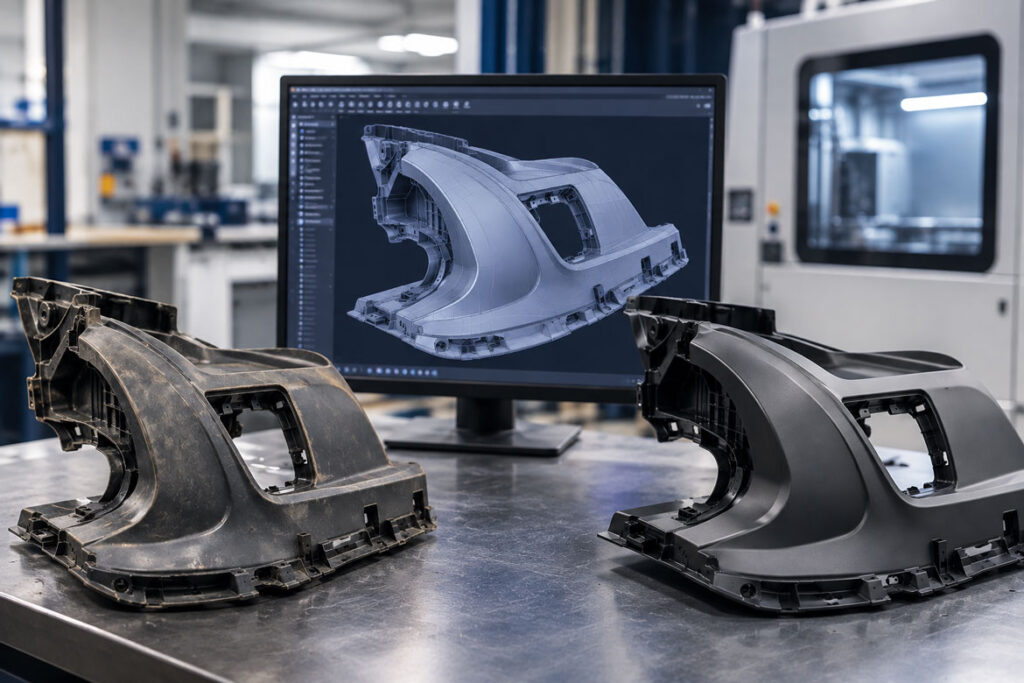
RP Polymers provides in-house 3D scanning to capture the geometry of existing plastic and industrial components for reverse engineering, redesign and product development. Scanning is useful for complex surfaces, legacy parts, components without drawings and applications where manual measurement is inefficient. The resulting scan data can be used as a digital reference for CAD reconstruction, dimensional comparison and design adaptation. RPP integrates scanning with 3D design, SLA prototyping and manufacturing development, creating a practical pathway from physical component to validated digital model and manufacturable solution.


3D Scanning Scope

Our 3D scanning service begins with component review and preparation, followed by digital surface capture and data processing. We define the required output according to whether the scan will support CAD reconstruction, dimensional reference, design comparison or product development, then connect the data directly into RPP’s engineering workflow where required.
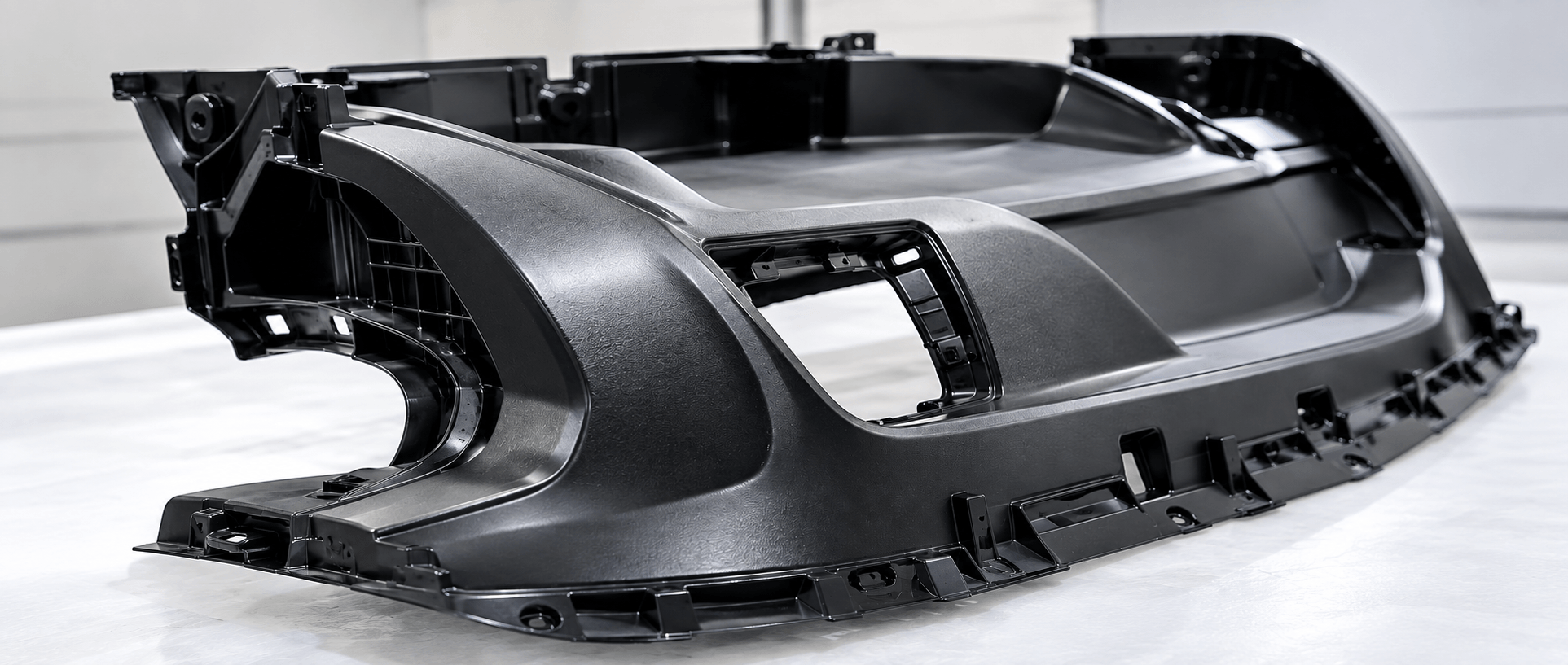
Digital capture of existing components
Complex surface and geometry acquisition
Scan data preparation for CAD reconstruction
Scan-to-design and reverse-engineering support

3D Scanner Features

Metrology-Grade Accuracy: Achieves up to 0.01 mm accuracy and 0.015 mm volumetric precision.
Advanced Laser System: A 5-in-1 system utilizing 41 blue laser lines (Class II, eye-safe), including a fine scanning mode with 14 crossed lines for ultimate detail.
Speed & Efficiency: Captures up to 2.1 million points per second over a large 600 x 550 mm single scan area.
Mobility: Features built-in 5G wireless transmission and global photogrammetry, perfect for unrestricted scanning around large automotive tooling and molds.

Solutions & Benefits

3D scanning can shorten the time required to recreate complex or undocumented components by capturing real geometry directly from the physical part. It is particularly useful when original CAD data is unavailable, parts contain freeform surfaces or customers need a reliable digital reference before redesign. By linking scanning with reverse engineering, design and prototyping, RPP can reduce manual handoffs and help customers move more efficiently from an existing component toward a validated replacement or localized manufacturing solution. This improves continuity across complex development projects.

Frequently Asked Questions

What types of components can RPP scan in-house?
RPP can scan a wide range of industrial and plastic components, subject to size, surface condition, accessibility and geometry. Reflective, transparent or highly complex surfaces may require preparation or alternative scanning approaches.
Does a 3D scan automatically become an editable CAD model?
No. Scan data normally represents captured surface geometry and may require cleanup, alignment and CAD reconstruction before becoming an editable engineering model. RPP can provide this additional reverse-engineering and design support when required.
Can damaged or worn components still be scanned effectively?
Yes. Damaged or worn parts can often be scanned to capture the available geometry, then reconstructed using engineering judgement, symmetry, mating features or reference dimensions. The required restoration scope is agreed during review.
Can scanning data be used for replacement part development?
Yes. Scanning is particularly useful for replacement, obsolete and localization projects where drawings are unavailable. The scan becomes a starting point for CAD reconstruction, design correction, prototype validation and eventual manufacturing development.
Select the fields to be shown. Others will be hidden. Drag and drop to rearrange the order.
  • Image
  • SKU
  • Rating
  • Price
  • Stock
  • Availability
  • Add to cart
  • Description
  • Content
  • Weight
  • Dimensions
  • Additional information
Click outside to hide the comparison bar
Compare